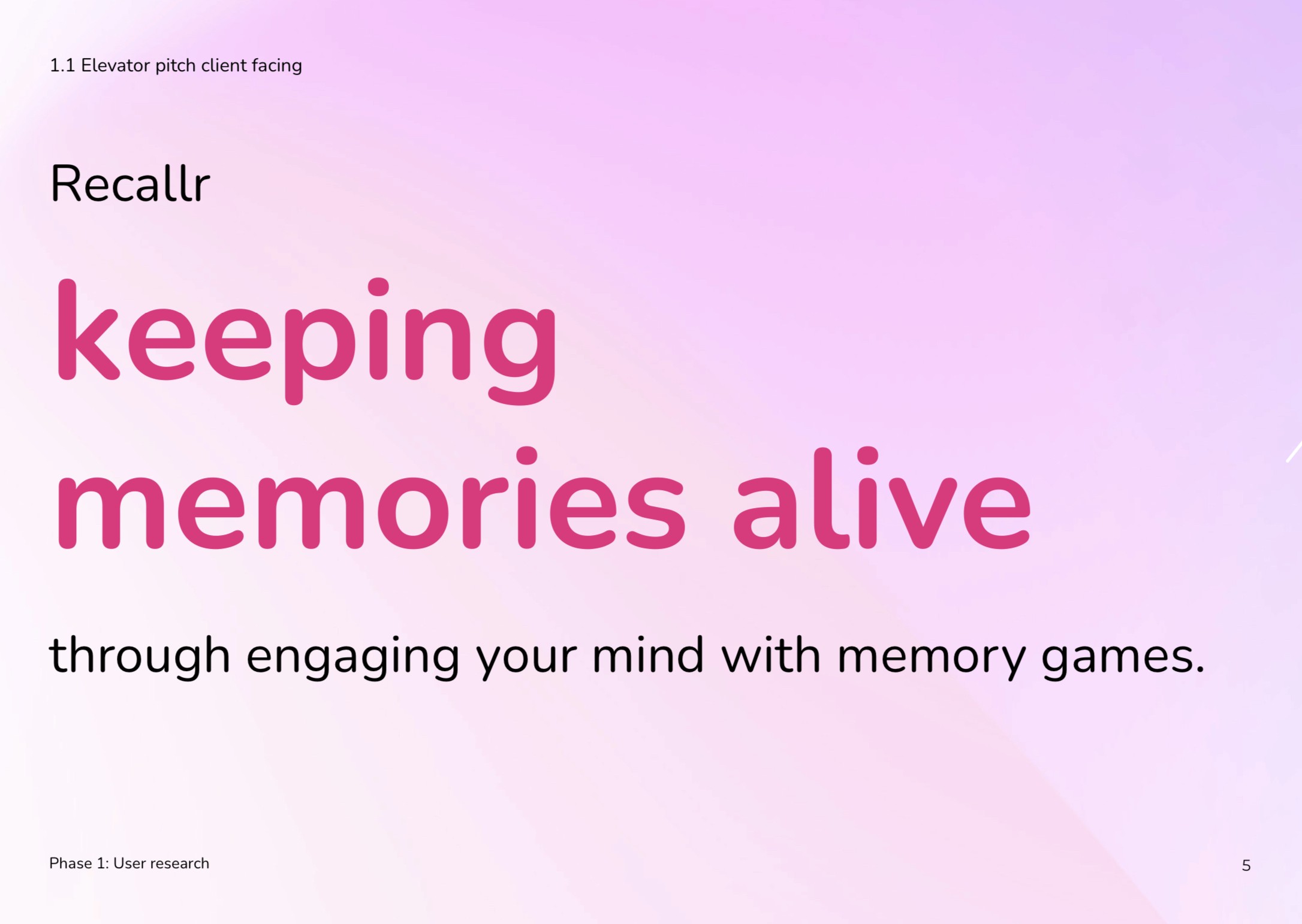
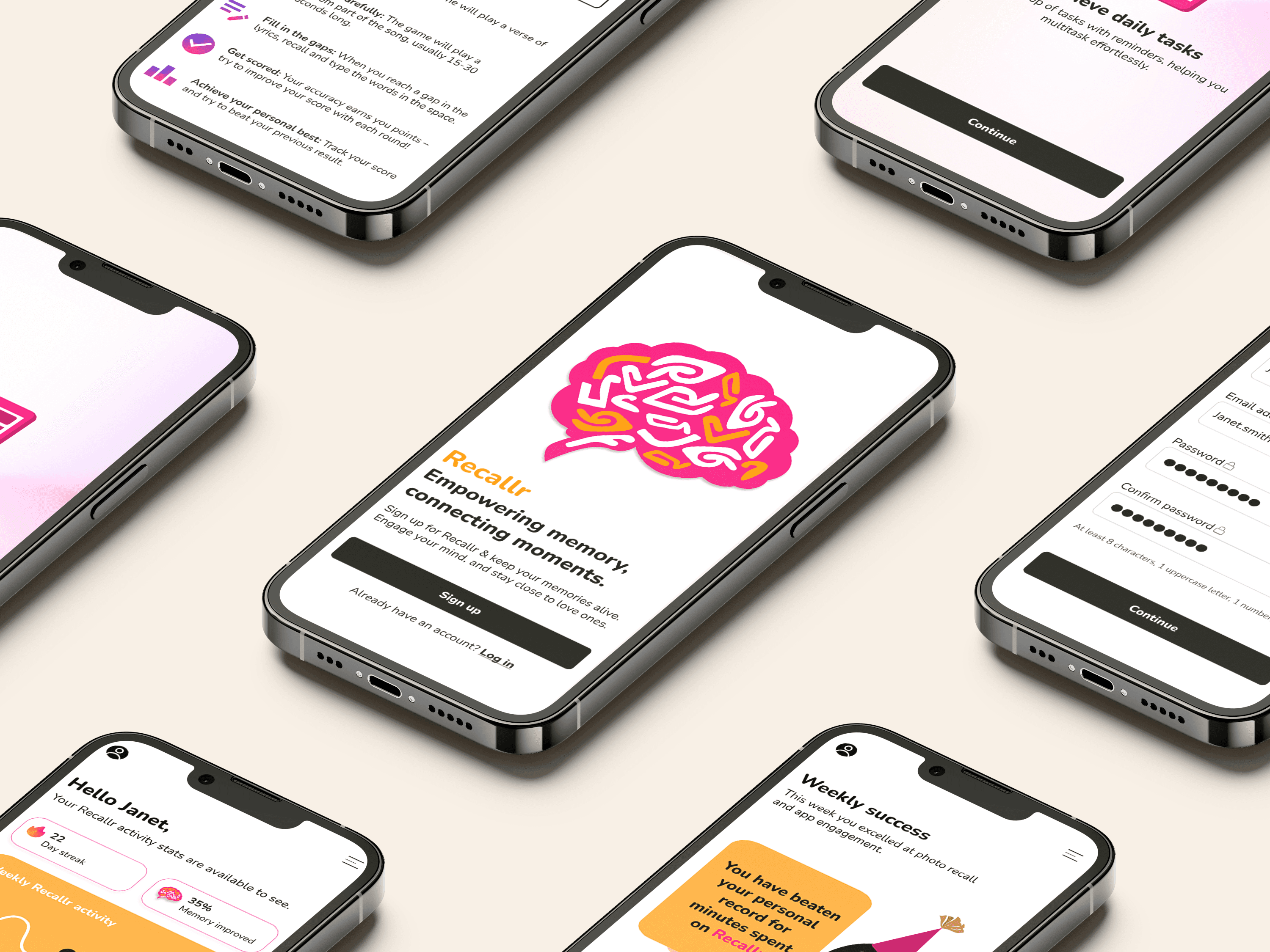
Recallr app prototype
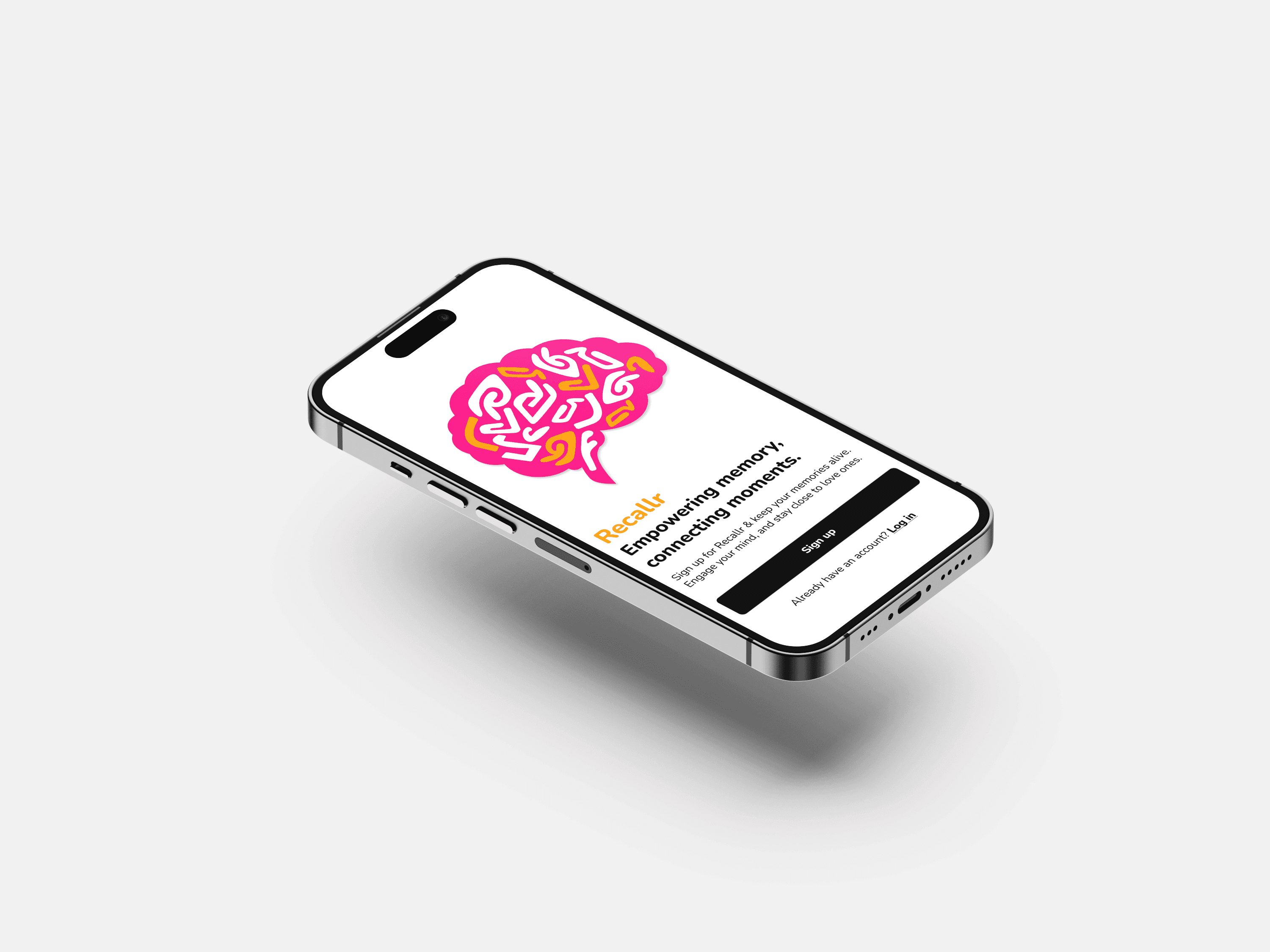
I created Recallr, a prototype mobile and desktop companion platform with a main purpose of engaging users’ personal memory. The app is centered around users who have dementia or Alzheimer’s within their family and have concerns of developing memory loss in the future. Recallr’s goal is not only to assist with memory retention but also to foster confidence, emotional connection, and dignity in users daily lives.

I had the opportunity to work with Refugee Support Group, a Reading based charity that supports people seeking sanctuary. They were looking for new ways to raise awareness of their updated name and strengthen their visibility with statutory funders. I was selected alongside another designer to help shape that communication.

As part of a collaborative project, six social media posts and a short animation were developed to highlight the impact of the organisation's services and encourage continued support from partner organisations. The project pushed me to grow creatively as I explored videography, photography and illustration. This experience also allowed me to learn how to navigate professional relationships within the circle of design.

Read more about this Real Job

Process

The development of Recallr was driven by a user-centred design process, beginning with in-depth user insight interviews with individuals who have family members living with Alzheimer’s. Alongside this, I conducted a competitor analysis of existing memory and health apps. This involved evaluating their strengths and weaknesses.

RESEARCH IMPACT

My research had a clear impact on Recallr's final design. Through interviews with people who have family members with Alzheimer’s and looking at existing apps, I found that most tools focus on basic reminders but lack motivation and meaningful engagement.

This led me to focus on helping users stay consistent and see their progress. Recallr includes a stats page that shows activity over time, encouraging continued use and highlighting small wins.

See below for a document of my full process.

outcome

The final prototype successfully engages users by integrating their personal photos and music into key features, creating a more meaningful and personalised experience. The well-designed interface guides users naturally without instructions and helps users have an experience without any disruptions. The UI design uses colours which are known to be connected to brain engagement. These colours are used consistently throughout the app, within progress bars, illustrations and the main icon (brain maze). The app puts a focal point on congratulating users on their successes within the app and suggesting ways to improve their memory engagement.